
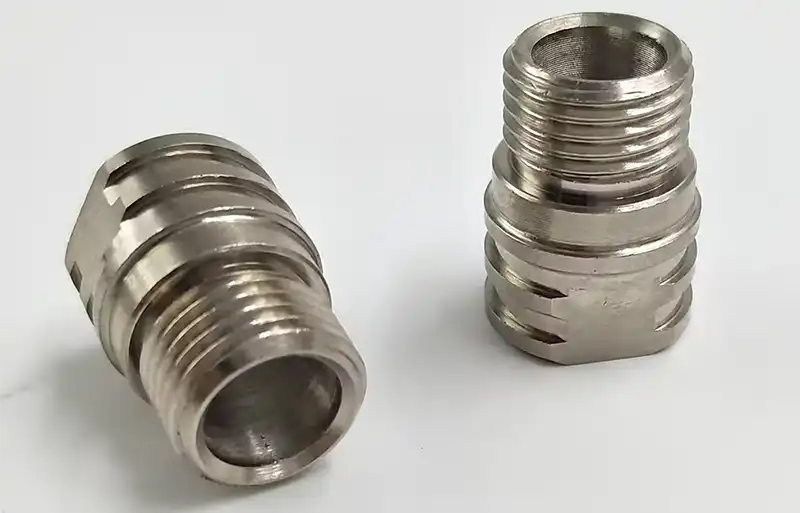
In the world of precision manufacturing, not every project requires mass production. Sometimes, the need is for a small batch of high-quality components — whether for prototyping, specialized industrial equipment, aerospace assemblies, or niche medical devices. This is where low volume CNC machining shines. By combining the precision and material versatility of computer numerical control machining with the flexibility to produce quantities ranging from a single part to a few thousand units, low volume CNC machining has become an essential capability for businesses that demand excellence without the overhead of high-volume tooling.
What Is Low Volume CNC Machining?
Low volume CNC machining refers to the production of precision machined parts in small quantities, typically ranging from one piece to several thousand units per batch. Unlike high-volume manufacturing, which relies on dedicated tooling, specialized fixtures, and optimized production lines, low volume CNC machining leverages the inherent flexibility of CNC technology — where part geometry is defined by software rather than physical tooling, enabling rapid changeovers and minimal setup time between jobs.
This approach eliminates the need for expensive molds, dies, or custom fixtures that are required in processes like injection molding, casting, or stamping. For engineers and product designers, low volume CNC machining offers a bridge between one-off prototyping and full-scale production, allowing them to validate designs, test materials, and fulfill production needs with the same precision and quality as mass-produced components.
Why Choose Low Volume CNC Machining?
No Tooling Costs
One of the most significant advantages of low volume CNC machining is the complete absence of upfront tooling costs. Processes like injection molding require custom molds that can cost tens of thousands of dollars and take weeks to manufacture. CNC machining, by contrast, requires only a digital CAD file and the appropriate cutting tools — which are standard, off-the-shelf items. This means you can go from design to finished part in days rather than months, at a fraction of the cost.
Design Flexibility and Iteration
In product development, designs rarely remain static. Engineers iterate, refine, and optimize based on testing results and feedback. Low volume CNC machining makes this iterative process seamless — a design change simply requires updating the CAD model and regenerating the toolpath. There is no need to modify or rebuild physical tooling, making it far more agile than traditional manufacturing methods.
Material Versatility
CNC machining can work with virtually any machinable material, including metals, plastics, and composites. Common materials used in low volume production include aluminum 6061 and 7075, stainless steel 316L and 17-4 PH, titanium Ti-6Al-4V, brass, copper, PEEK, Delrin, and polycarbonate. This material flexibility allows manufacturers to select the optimal material for their application — whether it requires strength, lightweight properties, corrosion resistance, electrical conductivity, or biocompatibility.
High Precision and Consistency
CNC machines deliver exceptional dimensional accuracy, typically holding tolerances of ±0.0005 inches (±0.013 mm) or better on production parts. Every part produced from the same program is identical, ensuring consistency across the entire batch. For industries such as aerospace, medical devices, and telecommunications, where even minor deviations can have serious consequences, this level of precision is non-negotiable.
Fast Lead Times
Without the need for custom tooling or lengthy setup procedures, low volume CNC machining can deliver finished parts in as little as a few days. Rapid prototype to production programs are a common offering, allowing companies to move quickly from concept validation to functional testing and eventual deployment. For time-sensitive projects — such as prototype builds for investor pitches, emergency replacement parts, or urgent production runs — this speed is invaluable.
Typical Part Quantities
Low volume CNC machining generally covers part quantities from one to approximately 5,000 units, though the exact upper limit depends on part complexity, material, and required tolerances. The following tiers are commonly recognized:
- Prototypes (1–10 parts): Functional prototypes, proof-of-concept builds, and design validation samples.
- Beta or pre-production runs (10–100 parts): Field testing, regulatory submission samples, and customer evaluation batches.
- Short production runs (100–1,000 parts): Small-batch manufacturing for niche markets, specialized equipment, or limited-edition products.
- Medium production runs (1,000–5,000 parts): Bridge production between prototyping and high-volume manufacturing, often serving steady demand for specialty components.
Industries That Rely on Low Volume CNC Machining
Aerospace and Defense
The aerospace industry frequently requires small batches of high-specification components made from titanium, Inconel, and high-strength aluminum alloys. Parts such as engine mounts, hydraulic fittings, sensor housings, and structural brackets are produced in low volumes with stringent documentation and material traceability requirements. CNC machining is the preferred method for these applications due to its ability to meet aerospace-grade tolerances and surface finish standards.
Medical and Healthcare
Medical device manufacturers rely on low volume CNC machining for surgical instruments, implant prototypes, diagnostic equipment components, and custom orthopedic devices. Biocompatible materials such as titanium, medical-grade stainless steel, and PEEK are routinely machined to sub-micron surface finishes and tight tolerances. Many medical devices are produced in regulated quantities where the cost of injection molding tooling is unjustifiable, making CNC the only viable manufacturing route.
Automotive and Motorsports
From concept vehicles to racing components, the automotive industry uses low volume CNC machining for custom brackets, suspension components, intake manifolds, and prototype engine parts. Motorsports teams particularly value the speed and flexibility of CNC machining, as they often need to iterate designs between race weekends to optimize performance. Electric vehicle manufacturers also use CNC-machined components for battery enclosures, motor housings, and charging port assemblies.
Semiconductor and Electronics
Hardware for semiconductor fabrication equipment, telecommunications infrastructure, and consumer electronics requires components with extremely tight tolerances and exceptional surface quality. CNC-machined vacuum chambers, wafer handling components, RF connector housings, and heat sink assemblies are all produced in low to medium volumes. Aluminum and copper alloys dominate this sector, often with anodized or electroplated finishes for enhanced performance.
Robotics and Automation
Robot manufacturers produce custom end-effectors, joint components, sensor mounts, and structural frames in relatively small batches. The complexity of these parts — often featuring integrated channels for cables and pneumatics, precise bearing seats, and lightweight yet rigid geometries — makes CNC machining the ideal production method. 5-axis CNC machining is particularly valuable for producing complex robotic components in a single setup.
Research and Academia
Universities, research laboratories, and government institutions regularly commission low volume CNC machined parts for experimental apparatus, custom fixtures, and scientific instruments. These parts are often one-of-a-kind or produced in very small quantities, and they may be made from exotic materials or require unconventional geometries that are impossible to source commercially.
Common CNC Machining Processes for Low Volume Production
Milling
CNC milling is the most versatile machining process, using rotating cutting tools to remove material from a workpiece held stationary on a table. 3-axis, 4-axis, and 5-axis milling centers can produce complex 3D geometries, pockets, slots, holes, and threaded features. For low volume production, 5-axis machining is especially valuable as it allows complete part exposure in a single setup, reducing handling errors and improving geometric accuracy.
Turning
CNC turning produces cylindrical parts such as shafts, pins, bushings, and sleeves by rotating the workpiece against a stationary cutting tool. Swiss-style lathes are particularly suited for low volume production of small, complex turned parts, as they support the workpiece throughout the machining process, enabling high precision on long, slender components. Standard CNC lathes and lathe-mill combinations handle a wide range of turned part geometries.
Milling and Turning Combinations
Multi-tasking machines that combine milling and turning capabilities in a single setup offer significant advantages for low volume production. Parts that feature both rotational and non-rotational features — such as a shaft with keyways, cross-holes, and flanged ends — can be completed in one operation, eliminating the need for multiple setups and reducing lead times.
Surface Finishes and Post-Processing
CNC machining produces parts with excellent as-machined surface finishes, but many applications require additional surface treatment to meet functional or aesthetic requirements:
- Bead blasting: Creates a uniform matte finish and removes machining marks, ideal for preparatory surface treatment.
- Anodizing: Primarily used on aluminum parts to enhance corrosion resistance, wear resistance, and color appearance. Type II (sulphuric) and Type III (hard) anodizing are the most common.
- Passivation: Removes free iron from stainless steel surfaces to promote the formation of a protective oxide layer, essential for corrosion resistance in aggressive environments.
- Electropolishing: An electrochemical process that produces a mirror-like finish and reduces surface roughness, commonly used for medical and food-grade components.
- Painting and powder coating: Provides color coding, branding, and additional environmental protection for external components.
- Threading and tapping: CNC machines can produce internal and external threads directly, or parts can be tapped post-machining for standard thread forms.
Design for Manufacturing (DFM) Considerations
To optimize cost and quality in low volume CNC machining, certain design guidelines should be followed:
- Avoid unnecessary tight tolerances: Specify tight tolerances only on features that functionally require them. Over-specifying tolerances increases machining time and cost significantly.
- Use standard tool sizes: Internal corner radii should match available end mill diameters to avoid custom tooling and additional operations.
- Minimize the number of setups: Design parts that can be machined from a single orientation whenever possible, reducing setup time and accumulation of positional error.
- Consider material selection early: Some materials are significantly more difficult to machine than others. Aluminum is generally the easiest, while titanium andInconel require specialized tooling and slower cutting parameters.
- Allow adequate wall thickness: Thin walls are prone to vibration and deflection during machining, which can affect dimensional accuracy and surface finish. A minimum wall thickness of 0.8 mm for aluminum and 1.5 mm for steel is generally recommended.
Cost Considerations
The cost of low volume CNC machining is driven primarily by part geometry complexity, material selection, required tolerances, surface finish specifications, and quantity. Unlike high-volume manufacturing, where unit cost decreases dramatically with volume due to amortized tooling costs, CNC machining costs are more linear with quantity — each part requires roughly the same machining time regardless of batch size.
This means that for part quantities above approximately 1,000 to 2,000 units, alternative manufacturing methods such as investment casting, die casting, or injection molding may become more cost-effective, especially when the initial tooling investment can be spread across a large number of parts. However, for quantities below that threshold, CNC machining almost always offers the best combination of speed, quality, and total cost.
Bridging the Gap Between Prototype and Production
One of the most valuable roles that low volume CNC machining plays is serving as the bridge between prototyping and mass production. A company may design a product, validate it with CNC-machined prototypes, conduct field testing and regulatory approval, and then transition to a high-volume process once the design is finalized and demand is confirmed. Throughout this entire journey, the same precision and material properties are maintained — ensuring that the final production parts perform identically to the prototypes.
This continuity is something that additive manufacturing and other prototyping methods struggle to provide, as printed parts often have different mechanical properties and surface finishes compared to production parts. With CNC machining, there is no such disconnect — the prototype and the production part are made using the same process, from the same materials, to the same tolerances.
Conclusion
Low volume CNC machining is a powerful manufacturing solution that delivers production-quality parts without the high costs and long lead times associated with custom tooling. Its ability to produce complex geometries in a wide range of materials, with exceptional precision and repeatable quality, makes it the go-to choice for industries ranging from aerospace and medical devices to automotive, robotics, and semiconductor manufacturing.
Whether you need a single prototype for design validation, a small batch of custom components for a specialized application, or a medium-volume production run before committing to high-volume tooling, low volume CNC machining provides the flexibility, speed, and precision that modern manufacturing demands. If you are exploring manufacturing options for your next project, consider how Low Volume CNC Machining can help you bring your designs to life with confidence and efficiency.