
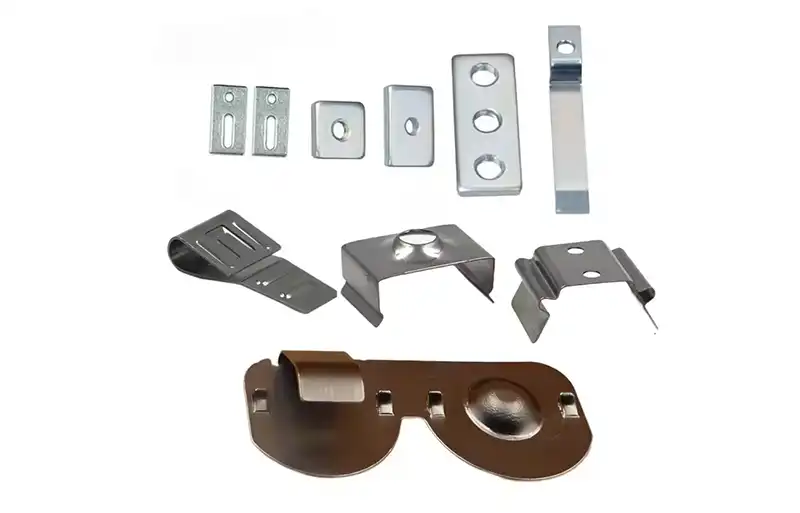
Metal Stamping: A Comprehensive Guide to Precision Metal Forming
Metal stamping is one of the most widely used manufacturing processes for producing high-volume metal parts with consistent quality and tight tolerances. From simple brackets to complex electronic connectors, stamped components are found in nearly every industry. Understanding the fundamentals of metal stamping, its processes, materials, and applications can help engineers and procurement teams make informed decisions for their manufacturing needs.
What is Metal Stamping?
Metal stamping is a fabrication process that uses specialized presses and custom tools or dies to transform sheet metal into finished parts. The process involves placing a sheet of metal into a stamping press, which then forces the material into a die cavity to cut, form, or emboss it into the desired shape. Metal stamping can produce parts ranging from a few grams to several kilograms, and it is capable of producing everything from simple washers to intricate multi-level components.
The Metal Stamping Process
The metal stamping process involves several key steps that work together to produce high-quality parts efficiently.
1. Tool and Die Design
The foundation of any successful metal stamping project is a well-designed tool and die. Custom dies are engineered to the exact specifications of the part, incorporating considerations for material flow, springback, and part geometry. Modern computer-aided design and manufacturing tools allow engineers to optimize die designs before any metal is cut, reducing trial-and-error during production.
2. Material Selection
The choice of sheet metal material significantly affects the stamping process and the final part properties. Common materials include steel, stainless steel, aluminum, brass, copper, and various specialty alloys. Each material has different forming characteristics, strength requirements, and cost considerations that must be balanced against the application needs.
3. Blanking and Punching
Blanking is the process of cutting the raw material into the correct blank size and shape before forming operations begin. Punching creates holes in the part by forcing a punch through the metal into a matching die. These operations can be performed in a single stroke using progressive or compound dies, improving efficiency and reducing handling time.
4. Forming Operations
Forming operations bend, stretch, or compress the metal into the desired three-dimensional shape. Common forming processes include bending, deep drawing, piercing, flanging, and embossing. The press applies controlled force to deform the material without cracking or thinning it beyond acceptable limits.
5. Quality Control
Throughout the stamping process, quality control measures ensure that every part meets specifications. In-line inspection systems, automated vision measurement, and periodic CMM checks verify dimensions, surface quality, and material integrity. Statistical process control helps maintain consistency across high-volume production runs.
Types of Metal Stamping Processes
Different stamping processes are suited to different part geometries and production requirements.
- Progressive stamping — Uses a series of stations in a single die to perform multiple operations on a continuous strip of metal. This is the most efficient process for high-volume production, with parts ejected as soon as the final operation is complete.
- Transfer stamping — Individual blanks are transferred between stations by a mechanical system, allowing for more complex parts with operations on both sides. Transfer stamping is ideal for larger parts or those requiring intricate geometries.
- Compound stamping — Combines multiple operations such as punching and forming in a single stroke at one station. This reduces handling and improves accuracy but is limited to simpler part designs.
- Simple die stamping — Uses a basic die and punch to perform a single operation per stroke. This is the most cost-effective option for low-volume production or prototyping.
Advantages of Metal Stamping
Metal stamping offers several compelling advantages that make it the preferred manufacturing method for many applications.
- High production rates — Modern stamping presses can produce hundreds or even thousands of parts per hour, making metal stamping ideal for mass production.
- Consistent repeatability — Once the tool and die are set up correctly, every part produced is virtually identical, ensuring consistent quality across the entire production run.
- Material efficiency — Nested part layouts and strip processing minimize material waste, and scrap metal can be recycled economically.
- Cost-effectiveness — For high-volume production, stamping offers one of the lowest per-part costs of any manufacturing process due to minimal labor requirements and fast cycle times.
- Strong part integrity — The grain structure of the metal is preserved and often enhanced during stamping, resulting in parts with good mechanical properties.
- Design flexibility — A wide range of materials, thicknesses, and geometries can be produced, and secondary operations can be integrated into the stamping process.
Applications Across Industries
Metal stamping serves virtually every major industry with components that meet diverse performance requirements.
- Automotive — Brackets, mounts, electrical contacts, chassis components, and under-hood hardware are all commonly produced through metal stamping.
- Electronics — Connectors, shield cans, contact springs, and precision terminals require the accuracy and consistency that stamping delivers.
- Aerospace — Structural brackets, fasteners, and specialized components meet the rigorous standards of the aerospace industry.
- Medical — Surgical instrument components, implant devices, and diagnostic equipment parts benefit from the cleanliness and precision of stamped metal.
- Appliance manufacturing — Housing panels, internal supports, and mounting brackets for household and commercial appliances are routinely stamped.
- Construction and infrastructure — Fasteners, brackets, connectors, and structural components for buildings and infrastructure projects rely on metal stamping.
Metal Stamping vs. Other Manufacturing Processes
When comparing metal stamping to alternative manufacturing methods, each process has distinct advantages depending on the application.
Compared to CNC machining, metal stamping is far more economical for high-volume production of sheet metal parts. While CNC machining excels at producing complex 3D parts from solid stock, stamping is unmatched in speed and cost efficiency for thin-section metal components.
Compared to injection molding, stamping handles metals rather than polymers, offering superior strength, thermal conductivity, and electrical conductivity. Metal stamped parts also maintain dimensional stability across a wider temperature range than plastic molded components.
Compared to casting, stamping produces parts with tighter tolerances and better surface finishes without the need for extensive post-processing. Casting is better suited for complex 3D geometries and large parts, while stamping dominates in thin-section, high-precision applications.
Choosing the Right Metal Stamping Partner
Selecting the right partner for your metal stamping project is crucial to achieving the quality, cost, and delivery performance your application requires. Key factors to consider include the supplier’s range of press capacities and die-making capabilities, their experience with your specific material and tolerance requirements, quality management systems and certifications, and their ability to provide design-for-manufacturability support.
A competent metal stamping provider should offer end-to-end services from initial design consultation through production and quality assurance. They should also be transparent about lead times, pricing, and any potential design modifications that could improve manufacturability or reduce cost. For complex projects that may also benefit from Metal Stamping integration with other manufacturing processes, a partner with broad capabilities can streamline your supply chain and improve overall project efficiency.
Conclusion
Metal stamping remains a cornerstone of modern manufacturing, delivering high-quality parts at competitive costs across an enormous range of industries. Its combination of speed, consistency, and material versatility makes it the go-to process for any application requiring precision metal components in volume. By understanding the fundamentals of the stamping process, the factors that influence part design and cost, and how to select the right manufacturing partner, engineers and buyers can leverage metal stamping to produce parts that meet the highest standards of quality and performance.