
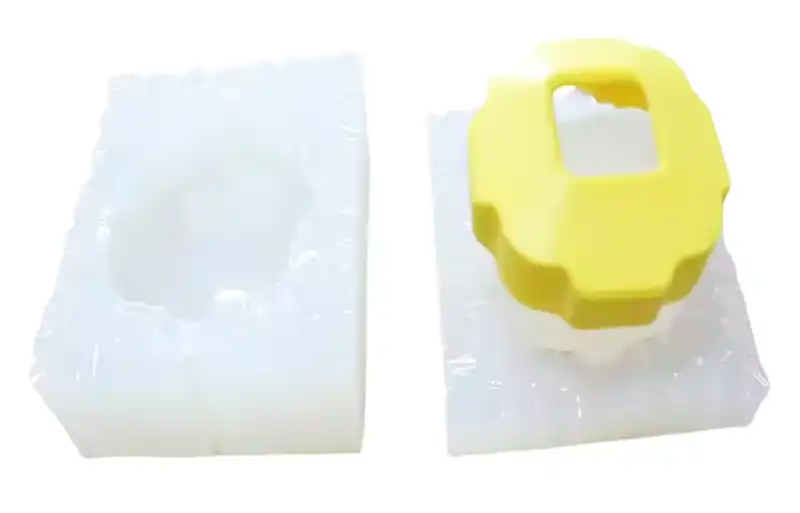
Vacuum casting — also known as polyurethane casting or silicone molding — has long served as an indispensable bridge between rapid prototyping and low-volume manufacturing. By combining the geometric freedom of silicone rubber molds with the precision of vacuum-assisted resin pouring, this process produces parts that closely mimic the material properties, surface finish, and dimensional accuracy of injection-molded components. Whether you are validating a new product design, producing pre-production test samples, or manufacturing small batches of end-use parts, understanding how vacuum casting works and when it is the right choice can save significant time and cost in your development workflow.
What Is Vacuum Casting?
Vacuum casting is a replica molding process in which liquid polymer resins — typically two-part polyurethanes — are poured into flexible silicone molds inside a vacuum chamber. The vacuum environment serves two essential functions: it removes dissolved and entrapped air from the mixed resin before it contacts the mold, and it draws the liquid material completely into every detail of the cavity without leaving voids or bubbles. The resulting cast part exhibits a smooth, homogeneous surface with excellent reproductions of fine features from the master pattern.
How Vacuum Casting Works Step by Step
Create the Master Pattern. The process begins with a master pattern produced by CNC machining, SLA 3D printing, SLS, or derived from an existing production component. Surface quality of the master determines the quality of every cast part.
Pour the Silicone Mold. Liquid platinum-cured silicone is mixed with catalyst and poured around the master. Softer silicones (10–15 Shore A) capture finer detail; harder compounds (25–30 Shore A) resist tearing and last longer.
Mix and Degass the Resin. Two-part polyurethane resin is measured, mixed, and placed in a vacuum chamber. Under reduced pressure, microscopic air bubbles expand, rise, and escape — eliminating porosity in the final part.
Vacuum-Assist Pouring and Curing. The degassed resin is poured into the mold inside the vacuum chamber. Atmospheric pressure pushes resin into every feature. Cure times range from 30 minutes to 8+ hours depending on formulation.
Demold and Post-Process. The flexible silicone is peeled away, gates are trimmed, and optional finishing such as sanding, painting, or secondary assembly is applied.
Material Options
Polyurethane casting resins replicate many thermoplastics: ABS-like (general purpose), PP-like (living hinges), PC-like (high impact), Nylon-like (wear resistance), soft elastomers (10A–90A durometer), transparent grades, high-temperature formulations (up to 150°C), and metal-filled variants for increased density and stiffness.
Advantages
- Rapid turnaround: One to three days from master to finished part
- Low upfront cost: No expensive metal tooling required
- Material performance matching: Isotropic properties comparable to injection-molded plastics
- Excellent surface quality: Smooth, bubble-free finishes
- Design iteration flexibility: Changes made at the master pattern, not the mold
Limitations
Silicone mold lifespan is typically 15–25 parts. Material aging characteristics may differ from target production plastics under extended UV or chemical exposure. Very large parts may exceed practical handling limits, and ultra-tight tolerances sometimes require secondary CNC operations.
Ideal Use Cases
Product development teams use vacuum casting for design verification builds, drop testing, and thermal validation before committing to injection molding. Medical device companies produce regulatory submission samples and clinical prototypes from biocompatible resins. Consumer electronics manufacturers create ergonomic evaluation units and marketing assets that must look and feel production-ready.
Conclusion
Vacuum casting occupies a unique niche that additive manufacturing and hard tooling cannot fill alone. It delivers production-representative parts rapidly and affordably, enabling engineers to validate designs with confidence before investing in costly mass-production tooling. For any organization seeking to compress development timelines and reduce manufacturing risk, Vacuum Casting remains an essential capability.